
Grand National Course Guide: Aintree Fences Explained
 Available in US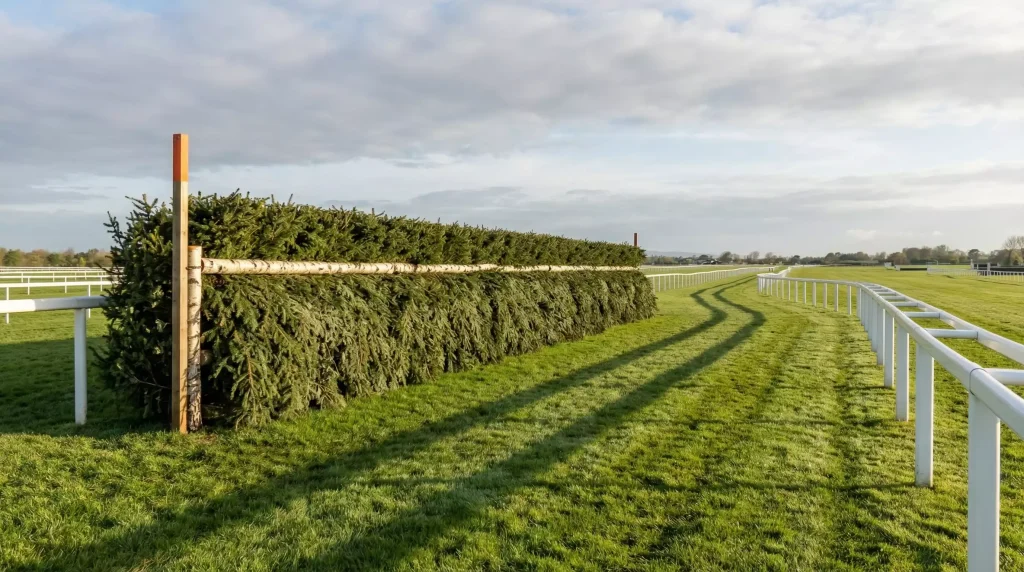
The Grand National course at Aintree is unlike anything else in horse racing. Four miles and two furlongs. Thirty fences. Two complete circuits of the most demanding obstacles in the sport. When 34 horses line up at the start, the course itself becomes the primary opponent—more predictable than rivals but far less forgiving.
Understanding the course helps you read the form when assessing runners. Horses with proven jumping ability at Aintree carry evidence that matters. Those attempting the National fences for the first time face questions that form alone cannot answer. The obstacles sort contenders from pretenders more ruthlessly than any other variable.
This guide breaks down the course layout, profiles the famous fences, and explains how safety modifications have changed the challenge over time. Whether you’re watching from the stands or your sofa, knowing what the horses face adds depth to every jump.
Grand National Course Guide — More on this topic at grand national free bets.
The Course Layout
The Grand National course forms an irregular triangle, starting and finishing in front of the main grandstands but venturing deep into the Aintree countryside for most of its journey. Horses complete two circuits, jumping 30 fences in total—16 unique obstacles, with 14 jumped twice on the first circuit and then again on the second.
The start sits adjacent to the Melling Road, with runners heading away from the stands toward the first fence. The opening circuit takes horses out toward the Canal Turn, around the back of the course, and past the famous Chair fence before returning to the start area. The second circuit covers the same ground but skips The Chair and the Water Jump, which sit on a spur only used once.
Distance matters enormously. At four miles and two furlongs, the Grand National is significantly longer than most steeplechases. Horses must conserve energy through the early stages to have anything left for the final half-mile. Those who sprint from the start rarely feature at the finish.
The run-in from the last fence to the winning post stretches nearly 500 yards—longer than many entire races. This extended finish rewards stamina over speed and creates opportunity for dramatic late surges. Many Grand Nationals have been won and lost on the run-in, with exhausted leaders caught by horses who timed their effort better.
The course rides differently depending on conditions. Soft ground makes the fences more demanding and the distance more draining. Good ground allows faster times but doesn’t fundamentally change the test. The National remains a survival exercise regardless of conditions.
The Famous Fences
Becher’s Brook is the Grand National’s most notorious obstacle. The fence itself is substantial but not exceptional; the danger lies in the landing. A significant drop on the far side—reduced from its original severity but still pronounced—catches horses who jump too flat or land awkwardly. Becher’s has ended more Grand National hopes than any other fence. Horses who negotiate it cleanly demonstrate the adjustable jumping technique the course demands.
The Chair stands as the tallest fence on the course at five feet two inches, preceded by a six-foot ditch that horses must clear before even reaching the fence. Jumped only once—on the first circuit—The Chair sits directly in front of the grandstands, ensuring maximum visibility when horses meet its challenge. Despite its size, The Chair rarely causes mass carnage; horses approach it with respect, and the ground rises slightly on the landing side, softening the impact.
Canal Turn requires a sharp left-hand turn immediately after landing, testing both jumping accuracy and balance. Horses who jump straight at Canal Turn lose ground on those who angle their approach. Some jockeys deliberately swing wide to give their mount room; others cut the corner and risk interference. The turn sorts out field positions and often triggers pile-ups when horses collide mid-air.
Valentine’s Brook, jumped twice, features a drop similar to Becher’s but without the same fearsome reputation. Named after a horse who reportedly landed in the brook during an 1840 running, Valentine’s continues to claim fallers. Horses who handle Becher’s typically manage Valentine’s, but fatigue on the second circuit can expose weaknesses that weren’t apparent first time around.
Foinavon, the 23rd fence, earned its name after the 1967 pile-up that allowed the 100/1 outsider to pick through chaos and win. The fence itself is relatively straightforward, but its location—in a crowded section of the course where loose horses accumulate—makes it a flashpoint for trouble. Jockeys approach Foinavon watching their surroundings as much as the fence itself.
The final fence decides many Nationals. After four miles of attrition, tired horses make errors. A clean jump provides momentum for the long run-in; a mistake hands the advantage to anyone still travelling well.
Safety Modifications Over the Years
The Grand National course has been progressively modified to improve horse and jockey safety. The drops at Becher’s Brook and other landing-side obstacles have been reduced. Fence cores have been softened, incorporating more plastic and less timber. Take-off and landing zones have been levelled. The cumulative effect is a course that remains demanding but no longer routinely produces fatalities.
The field size reduction from 40 horses to 34, implemented in 2026, addressed crowding concerns. Smaller fields mean less congestion at narrow fences, fewer loose horses creating interference, and more space for jockeys to navigate problems. Early evidence suggests completion rates have improved as a result.
Fence bypass routes allow loose horses to be steered away from the jumping course, reducing the risk they pose to runners still in competition. Veterinary teams positioned around the course provide rapid response to any incident. Medical facilities at Aintree meet standards that would have been unimaginable in earlier decades.
Public scrutiny has driven many changes. The Grand National draws attention precisely because of its scale and unpredictability, and that attention includes criticism when horses are injured. The sport has responded by making changes that demonstrably improve outcomes while preserving the essential character of the race. British racing’s record attendance of 5.031 million in 2026—reported by the BHA Racing Report—suggests the public broadly accepts this balance.
The debate continues. Animal welfare groups argue the race remains inherently dangerous regardless of modifications. Racing authorities maintain that the sport has never been safer and that risk, while reduced, cannot be eliminated entirely from any athletic competition involving animals. Bettors form their own views on this tension.
See also Attending Grand National 2026.
What the Course Means for Betting
Course form carries weight in Grand National betting. Horses who’ve completed the National before—or won over the National fences in races like the Topham or Becher Chase—prove they handle Aintree’s unique demands. First-time National runners remain unknown quantities regardless of how impressive their form looks elsewhere.
Jumping style matters. Bold, accurate jumpers fare better than those who fiddle fences or hang in the air. Watch videos of previous runs; look for horses who maintain rhythm through obstacles rather than losing momentum at each fence. The course rewards technique as much as talent.
The Course Tests Horses—Set Limits That Test You
Understanding fences makes you a more informed viewer, not a guaranteed winner. The course’s unpredictability ensures that even expert analysis fails regularly. Bet what you can afford to lose, and enjoy the spectacle regardless of your selection’s fate.
If gambling becomes problematic, support is available. GambleAware and the National Gambling Helpline offer free, confidential advice. All UK-licensed bookmakers require customers to be 18+. Terms and conditions apply.
