
Grand National Free Bets 2026: Best UK Betting Offers and Bonuses
 Available in US
Every Offer. Every Bookmaker. One Place.
Start Reading
Introduction to Grand National Free Bets
The Grand National isn't just another horse race. It's the one day of the year when your aunt calls to ask what an each-way bet is, when office sweepstakes spring up in workplaces across Britain, and when millions of people who haven't thought about horse racing since the previous April suddenly care very much about a field of jumpers tackling thirty fences at Aintree. For these once-a-year punters, grand national free bets represent the single best opportunity to get involved without risking the weekly shopping budget.
The numbers tell the story. According to Entain Group research, the Grand National attracts 700% more bets than the Cheltenham Gold Cup, its nearest competitor in the racing calendar. Bookmakers anticipate over £250 million in wagers on the 2026 renewal, making it the largest single betting event in British sport. "Without a doubt, the Grand National is the greatest sporting event in the UK," an Entain spokesperson noted. "It captures the imagination of friends and families up and down our high streets and online."
This guide exists because the sheer volume of promotional offers can overwhelm even experienced bettors. Every major UK bookmaker rolls out sign-up bonuses, enhanced odds, and money-back specials in the weeks before Aintree. Some of these offers genuinely add value. Others come wrapped in terms and conditions that effectively nullify any benefit. Distinguishing between them requires understanding not just what's on offer, but how different bonus structures actually work in practice.
What makes Grand National free bets particularly valuable is the nature of the event itself. This is a handicap chase where 34 horses compete over the most demanding course in National Hunt racing. Favourites have a notoriously poor record. Long-odds winners are common. In that context, free bets allow punters to take positions on bigger-priced runners without the usual financial exposure. A free bet on a 25/1 shot that finishes fifth costs nothing when it loses, but those enhanced each-way place terms many bookmakers offer during Grand National week can still generate returns.
The guide covers every aspect of Grand National betting offers: how to identify the most valuable promotions, how to claim them without falling foul of eligibility requirements, what existing customer offers are worth pursuing, and how to structure your betting to maximise the value of bonus stakes. Whether you're a complete newcomer placing your first horse racing bet or a regular punter looking to extract maximum value from the spring's biggest meeting, the information here will help you make smart betting decisions when the tapes go up on April 11th.
What Smart Bettors Should Know Before April
- The best sign-up offers cluster around the £30-40 free bet range with £10 minimum stakes. bet365's low 1/5 minimum odds requirement provides flexibility; William Hill's £40 headline value has accessible 1/2 (1.5) minimum odds but a 7-day expiry requiring careful timing.
- Each-way betting with extended place terms is the optimal structure for once-a-year punters. When bookmakers pay seven places at 1/4 odds instead of the standard four, your probability of return increases substantially on bigger-priced selections.
- Timing your registration matters. Short-expiry offers (4-7 days) should be claimed in the final week before April 11th. Longer expiry offers can be claimed earlier without risk of free bets lapsing before race day.
- Free bets generate more expected value at longer odds. Deploy promotional stakes on selections at 10/1 or above where the stake-not-returned mechanic hurts less than it would on favourites.
- Payment method is the most common claim killer. Use a UK debit card for your first deposit—Skrill, Neteller, and PayPal typically disqualify you from sign-up bonuses.
Top Grand National Free Bet Offers at a Glance
Before diving into the full comparison, here are three offers that stand out for different types of Grand National bettors. Each has been selected based on the balance between bonus value and realistic achievability of the terms.
bet365: Bet £10 Get £30 in Free Bets

The straightforward structure makes this ideal for newcomers. Deposit £10, place a qualifying bet at odds of 1/5 or greater, and receive £30 in free bet credits regardless of whether your first bet wins or loses. The credits arrive as three £10 free bets, which allows flexibility in how you deploy them across Grand National day. The key advantage is the low minimum odds requirement—most competitors demand evens or higher. The limitation is that free bet stakes aren't returned with winnings, which marginally reduces expected value compared to stake-returned alternatives.
Paddy Power: Bet £5 Get £30 in Free Bets
This offer takes a low-barrier approach ideal for cautious punters. Deposit and stake just £5 at minimum odds of evens (2.0), and receive £30 in free bet tokens once your qualifying bet settles. The 30-day expiry provides ample time to use your bonus across Grand National week and beyond. Paddy Power's Grand National coverage includes their signature money-back specials and extra place offers for existing customers. The low minimum stake makes this accessible to anyone wanting to dip a toe into Grand National betting without significant outlay.
William Hill: Bet £10 Get £40 in Free Bets
The highest headline value among major bookmakers, with accessible qualifying terms. The £40 arrives as four £10 free bet tokens, with 7-day expiry—so timing your registration is essential. William Hill's Grand National coverage is extensive, and the free bets can be split across the main race and the full Aintree festival card. The minimum odds requirement of 1/2 (1.5) is more generous than many competitors demand. Best suited to punters who want maximum bonus exposure and can use their free bets within a week of claiming.
These three represent the spectrum of current offers: a balanced all-rounder with flexible minimum odds, a low-stake entry point with generous bonus multiplier, and a high-value option with moderate conditions. The complete breakdown in the next section compares all major UK bookmaker promotions, including wagering requirements, expiry dates, and Grand National-specific features like extra place offers.
Complete Grand National Betting Offers Comparison
The table below compares sign-up offers from major UK-licensed bookmakers, with Grand National-specific features highlighted. All offers are subject to terms and conditions, which can change before race day. The information reflects offers available as of March 2026.
| Bookmaker | Offer | Min Deposit | Min Odds | Wagering | Expiry | Extra Places | BOG | NRNB |
|---|---|---|---|---|---|---|---|---|
| bet365 | Bet £10 Get £30 | £10 | 1/5 | 1x | 30 days | Yes | Yes | Yes |
| Paddy Power | Bet £5 Get £30 | £5 | Evens | 1x | 30 days | Yes | Yes | Yes |
| William Hill | Bet £10 Get £40 | £10 | 1/2 | 1x | 7 days | Yes | Yes | Yes |
| Betfred | Bet £10 Get £50 | £10 | Evens | 1x | 7 days | Yes | Yes | Yes |
| Coral | Bet £5 Get £30 | £5 | 1/2 | 1x | 7 days | Yes | Yes | Selected |
| Ladbrokes | Bet £5 Get £30 | £5 | 1/2 | 1x | 7 days | Yes | Yes | Selected |
| BoyleSports | Bet £10 Get £40 | £10 | Evens | 1x | 7 days | Yes | Yes | Yes |
| Betway | Bet £10 Get £30 | £10 | 3.00 | 1x | 7 days | Selected | Yes | No |
| 888sport | Bet £10 Get £30 | £10 | 1/2 | 1x | 7 days | Selected | Yes | Selected |
| BetVictor | Bet £10 Get £30 | £10 | Evens | 1x | 7 days | Yes | Yes | Yes |
Reading the table: Min Odds shows the minimum price your qualifying bet must reach. Wagering indicates how many times you must stake the free bet before winnings become withdrawable—1x means a single use, no rollover. BOG (Best Odds Guaranteed) means if the SP is higher than your odds when you placed the bet, you get paid at the bigger price. NRNB (Non-Runner No Bet) refunds ante-post stakes if your selection doesn't run.
Expiry matters: Notice the variation from 4 to 30 days. If you claim a Coral offer in mid-March, your free bets may expire before Grand National day. Timing your registration is essential—the final week before the race is generally optimal for short-expiry offers.
Extra places explained: Standard Grand National each-way terms pay on four places. During race week, most bookmakers extend this to six, seven, or even eight places. The "Yes" entries confirm this feature is typically available, though the exact number of places may vary and is usually announced closer to the race.
Payment method exclusions: Not shown in the table but critical to understand—most offers exclude deposits via Skrill, Neteller, and Paysafecard. Use a debit card for your first deposit unless the terms specifically confirm e-wallet eligibility.
What the headline numbers hide: A £50 bonus sounds better than £30, but if the expiry window is seven days and you register three weeks before the National, you've gained nothing. Similarly, stricter minimum odds requirements affect which qualifying bets are valid. The bet365 offer at 1/5 minimum odds provides far more flexibility than Betway's 1.75 requirement—you could place your qualifying bet on virtually any horse in the field versus being restricted to shorter-priced selections.
How to Claim Grand National Free Bets
The claiming process follows a standard pattern across most UK bookmakers, but small variations in requirements trip up a surprising number of punters. Here's the complete sequence from registration through to having free bets available in your account.
Step 1: Choose your offer and check eligibility. You must be 18 or over, a UK or Ireland resident, and a new customer of that specific bookmaker. If you held an account with them in the past—even if it was closed years ago—you typically won't qualify. Some bookmakers also exclude customers who already hold accounts with sister brands under the same corporate umbrella.

Step 2: Navigate to the registration page via an official promotion link. This matters more than you might expect. Clicking through from a promotional page ensures the offer is attached to your new account. Registering directly through the bookmaker's homepage without following an offer link can mean missing the bonus entirely, with little recourse once the account is created.
Step 3: Complete the registration form accurately. Bookmakers verify identity using the details you provide. Mismatched information between your registration and identification documents will delay verification and may disqualify you from time-sensitive offers. Use your full legal name as it appears on your ID, your current address, and a valid mobile number.
Step 4: Deposit using an eligible payment method. This is where claims most commonly fail. The majority of sign-up offers exclude e-wallets such as Skrill, Neteller, PayPal, and Paysafecard from qualifying deposits. Use a UK debit card unless the terms explicitly confirm alternative methods are accepted. Apple Pay and Google Pay eligibility varies by bookmaker—check the terms if you prefer mobile payment methods.
Step 5: Place your qualifying bet before the offer expires. The qualifying bet must meet minimum stake requirements (usually matching the minimum deposit), minimum odds requirements, and often bet type requirements. An accumulator may not qualify where a single bet would. An each-way bet may count as two bets, meaning a £10 each-way is £20 total stake. Read the terms to confirm what constitutes a valid qualifying bet.
Step 6: Wait for your free bets to credit. Most bookmakers credit free bets once the qualifying bet is settled rather than when it's placed. If you bet on a race happening after the Grand National, you won't have free bets available for the big race itself. Plan accordingly—qualifying bets on events with quick settlement times ensure your bonus arrives in good time.
Common mistakes that void bonuses: Depositing via an excluded payment method tops the list. Placing a qualifying bet below minimum odds comes second—if the requirement is evens and you back a 1/2 favourite, you won't trigger the bonus. Third is failing to opt in when required; some offers demand you check a box during registration or click a specific button in your account before placing the qualifying bet. Finally, wagering requirements sometimes specify that free bets must be used on selections at minimum odds. A free bet placed on a 1/10 shot might be valid but ineligible for the promotion.
Types of Grand National Betting Offers Explained
Not all betting bonuses work the same way. Understanding the mechanics of each offer type helps you calculate genuine value rather than being swayed by impressive-sounding headline figures. Here's how the main categories function in practice.
Bet and Get Free Bets
The most common promotional structure in UK betting. Place a qualifying bet of a specified amount, and receive free bet tokens in return. The sequence is: deposit money, bet that money, receive bonus credits. The free bet tokens then function as stake-free wagers—you keep any winnings but not the original stake.
This "stake not returned" (SNR) mechanic significantly affects value calculations. If you place a £10 free bet at 5/1, a winning bet returns £50 profit rather than £60 (the £60 would apply if the stake were returned). For even-money bets, the difference is more pronounced: a £10 free bet at evens returns £10, not £20.
Some operators offer "stake returned" (SR) free bets, though these are rarer for sign-up offers. When comparing promotions, an SR free bet is worth roughly twice an SNR free bet at odds of evens, though this gap narrows at longer prices. A £20 SR free bet provides more expected value than a £30 SNR free bet when betting on short-priced runners.
Watch for offers split across multiple tokens. "Bet £10 Get £30" often means three £10 free bets rather than one £30 credit. This provides flexibility—you can spread risk across different selections—but it also means you can't place a single larger free bet if that suits your strategy.
Enhanced Odds Promotions
Bookmakers temporarily boost odds on specific outcomes to attract new customers. During Grand National week, you might see the favourite offered at 10/1 instead of its market price of 7/1, with a maximum stake cap of £10. The extra value is paid as free bets rather than cash, which explains why the enhanced price can appear so generous.
These offers require careful evaluation. Since winnings above the normal price are typically paid in free bets (SNR), the actual value addition is lower than headline figures suggest. Enhanced odds promotions work best when the underlying selection is one you'd back regardless of the boost. The maximum stake caps also limit total upside—£10 at 10/1 returns £100, which is meaningful but won't transform your betting bank.
Money-Back Specials
Rather than giving free bets upfront, money-back offers refund your stake under specific conditions. For the Grand National, common triggers include: your horse finishing second, your horse falling or being brought down, or your selection being beaten by a specific margin. Refunds typically arrive as free bets rather than cash, which affects their true value.
These offers reduce variance on particular outcomes. If you're concerned about the risk of fallers in a steeplechase over thirty fences, a money-back-if-your-horse-falls offer provides insurance against that specific scenario. Evaluate these offers against the base probability of the trigger event—money-back-if-your-horse-falls is more valuable statistically than money-back-if-second, given multiple horses typically fall in the Grand National while only one finishes runner-up.
Combining money-back specials with each-way betting requires attention to specific terms. Some offers only apply to win-only bets. Others exclude ante-post wagers. Read the full terms before assuming your planned bet qualifies.
Deposit Bonuses
A simpler structure than bet-and-get: deposit a sum and receive matching bonus funds, typically at 100% up to a specified limit. Deposit £50, receive £50 in bonus credits. The appeal is immediate additional betting power without needing to place an initial qualifying bet.
The trade-off comes in wagering requirements. Deposit bonuses almost always carry rollover conditions requiring you to stake the bonus multiple times before withdrawal. A 5x wagering requirement on a £50 bonus means placing £250 in bets before cashing out. This erodes much of the apparent value—the house edge on that turnover eats into your bonus.
For Grand National betting specifically, deposit bonuses can be cumbersome. If you want to place a few bets on the big race and withdraw any winnings promptly, wagering requirements prevent that. The structure suits punters planning sustained betting activity rather than event-focused gamblers backing a couple of selections on a single afternoon.
Grand National Offers for Existing Customers
Sign-up bonuses grab the headlines, but existing customer promotions often deliver more value for active bettors. These features are available to all customers with existing accounts, regardless of when they registered. During Grand National week, bookmakers typically enhance these standard offerings, making them particularly relevant for the Aintree festival.
Non-Runner No Bet
Non-Runner No Bet (NRNB) eliminates the primary risk of ante-post betting: backing a horse that never makes it to the start. Without NRNB, if you place an ante-post bet in January and your selection is injured in February, you lose your stake. With NRNB, your stake is refunded in full if the horse doesn't run.
The Grand National field isn't finalised until shortly before the race, making NRNB particularly valuable. Trainers may withdraw horses due to unsuitable ground conditions, minor injuries, or simply deciding the race isn't right for their runner. NRNB typically applies from a specified date—often around two weeks before the race—and sometimes only to bets placed after that announcement.
Most major UK bookmakers now offer NRNB on Grand National ante-post markets as standard. Check whether your bookmaker includes NRNB automatically or requires opt-in—the terms vary, and assuming coverage where none exists could prove costly.
Best Odds Guaranteed
Best Odds Guaranteed (BOG) ensures you receive the better of two prices: the odds when you placed your bet, or the starting price (SP) if it's higher. This matters in racing markets where prices can drift significantly between bet placement and race time.
Consider a practical example. You back a Grand National runner at 20/1 on the morning of the race. By post time, market moves push the SP to 28/1. With BOG, your bet is settled at 28/1, giving you 40% more return than your original price. Without BOG, you'd receive only your original 20/1.
BOG typically applies only to bets placed on the day of the race, not to ante-post wagers. Most bookmakers cap BOG payouts at a specified maximum. During Grand National week, some bookmakers extend BOG to apply from an earlier date or lift payout caps—these enhancements are worth monitoring.
Extra Places on Each-Way Bets
Standard each-way terms for the Grand National pay on four places at one-quarter the odds. During race week, bookmakers typically extend this to six, seven, or occasionally eight places. For a race with historically high attrition rates and frequent surprises, extra places can dramatically improve expected returns on each-way bets.
The mathematics favours punters significantly. In a 34-runner field where standard terms pay 4 places, roughly 12% of runners return place money. At 7 places, that rises to 21%. If you back a 25/1 shot each-way, standard terms require it to finish in the first four for a place return. Seven-place terms mean fifth, sixth, or seventh-place finishes also pay out.
Extra place offers vary by bookmaker and are typically announced in the week before the race. Ante-post each-way bets may not qualify for extra places—the terms often apply only to bets placed after the offer is announced. If extra places are important to your strategy, consider placing your each-way bets closer to race day when the enhanced terms are confirmed.
The UK Horse Racing Betting Market in 2026
The promotional intensity around Grand National week doesn't happen by accident. Understanding the broader betting landscape provides context for why bookmakers compete so aggressively for this particular audience, and why the offers described above are so generous.
The headline numbers tell a story of contraction. According to Racing Post analysis of Gambling Commission data, online turnover on British racing fell from £10 billion in 2021-22 to £8.73 billion in 2023-24—a decline of 16.3% in three years. Adjusted for inflation, the real-terms drop approaches 26%. This isn't a blip; it reflects fundamental changes in betting behaviour and regulatory environment.
Yet within this declining market, certain metrics point in the opposite direction. The Horserace Betting Levy Board, which collects contributions from bookmakers to support British racing, reported record yields of £108.9 million in 2024-25—the highest since levy reforms in 2017 and the fourth consecutive year of growth. Alan Delmonte, Chief Executive of the HBLB, noted that while this represents progress, historical context matters: "Levy yield for the 12 months to 31 March 2025 reached almost £109m, the fourth successive year of increase and the highest since the Levy collection reforms of 2017 albeit short of the 2007-08 record of £116.5m."
The apparent contradiction—declining turnover but rising levy—reflects concentration of betting activity around major events. According to HBLB data, average turnover per race fell approximately 19% between 2021-22 and 2024-25. Punters aren't betting less on racing; they're betting less on routine midweek meetings while maintaining or increasing engagement with premium events. The Grand National epitomises this shift. When the overall market shrinks but flagship events hold their value, bookmakers have compelling commercial reasons to attract customers during racing's showcase moments.
This market dynamic explains the intensity of promotional competition around Aintree. Each Grand National represents a disproportionate share of annual racing turnover for most bookmakers. New customers acquired during Grand National week may become year-round bettors. The commercial logic driving generous free bet offers isn't altruism—it's customer acquisition economics in a market where every major event has outsized importance.
How Britain Bets on the Grand National
The Grand National occupies a unique position in British betting culture. It's the one horse race that casual punters, people who never normally gamble on sport, feel compelled to have an opinion on. Understanding how this audience differs from regular racing bettors illuminates why certain offer types work better for Grand National betting than others.
Research from Entain Group reveals the scale of casual participation: 82% of cash bets on the Grand National are £5 or less, and fewer than 1% exceed £20. This isn't a market dominated by serious punters deploying large stakes based on form analysis. It's a market of fivers and tenners, of office sweepstakes and family pools, of people backing horses because they liked the name or the colours.

Survey data from YouGov conducted for OLBG explores selection methods: 51% of those planning to bet on the Grand National choose their horse based on its name, while 43% look at the odds and 36% go with intuition. Detailed form analysis—the bread and butter of serious racing punters—barely registers. The Grand National casual bettor is fundamentally different from someone handicapping midweek racing at Wetherby.
This behavioural profile explains why low-stakes offers dominate the market. A "Bet £5 Get £20" promotion precisely matches how most people intend to bet anyway. Higher minimum stakes exclude portions of the target audience. The 43% planning to stake less than £10 would balk at a £25 minimum deposit requirement, regardless of how attractive the bonus might be.
The shift toward online betting continues reshaping how people engage with the race. The same YouGov survey found 62% of those planning to bet would do so online, compared to 28% in high street bookmakers and just 9% on-course at Aintree. This migration to digital channels drives bookmaker investment in mobile apps and online promotional mechanics—the Grand National audience increasingly expects to place their annual flutter from a phone while watching the race on television, not by queueing in a betting shop.
Cultural attachment remains strong despite changing behaviours. A striking 77% of those surveyed consider Grand National betting part of British culture. This sentiment sustains the event's commercial appeal even as racing attendance and regular betting participation decline elsewhere. The Grand National isn't just the biggest betting race; it's a national ritual that continues attracting participants who would never describe themselves as gamblers.
Each-Way Betting on the Grand National
Each-way betting is the bread and butter of Grand National punting, yet many casual bettors remain unclear on how it actually works. The mechanics are straightforward once explained, and understanding them is essential for evaluating whether extra-place offers genuinely add value.
An each-way bet is two bets in one: a win bet and a place bet, each at half your total stake. A £10 each-way bet costs £20 total—£10 to win and £10 to place. If your horse wins, both bets pay out. If it places (finishes in a paying position without winning), only the place bet returns. If it finishes outside the places, you lose both stakes.
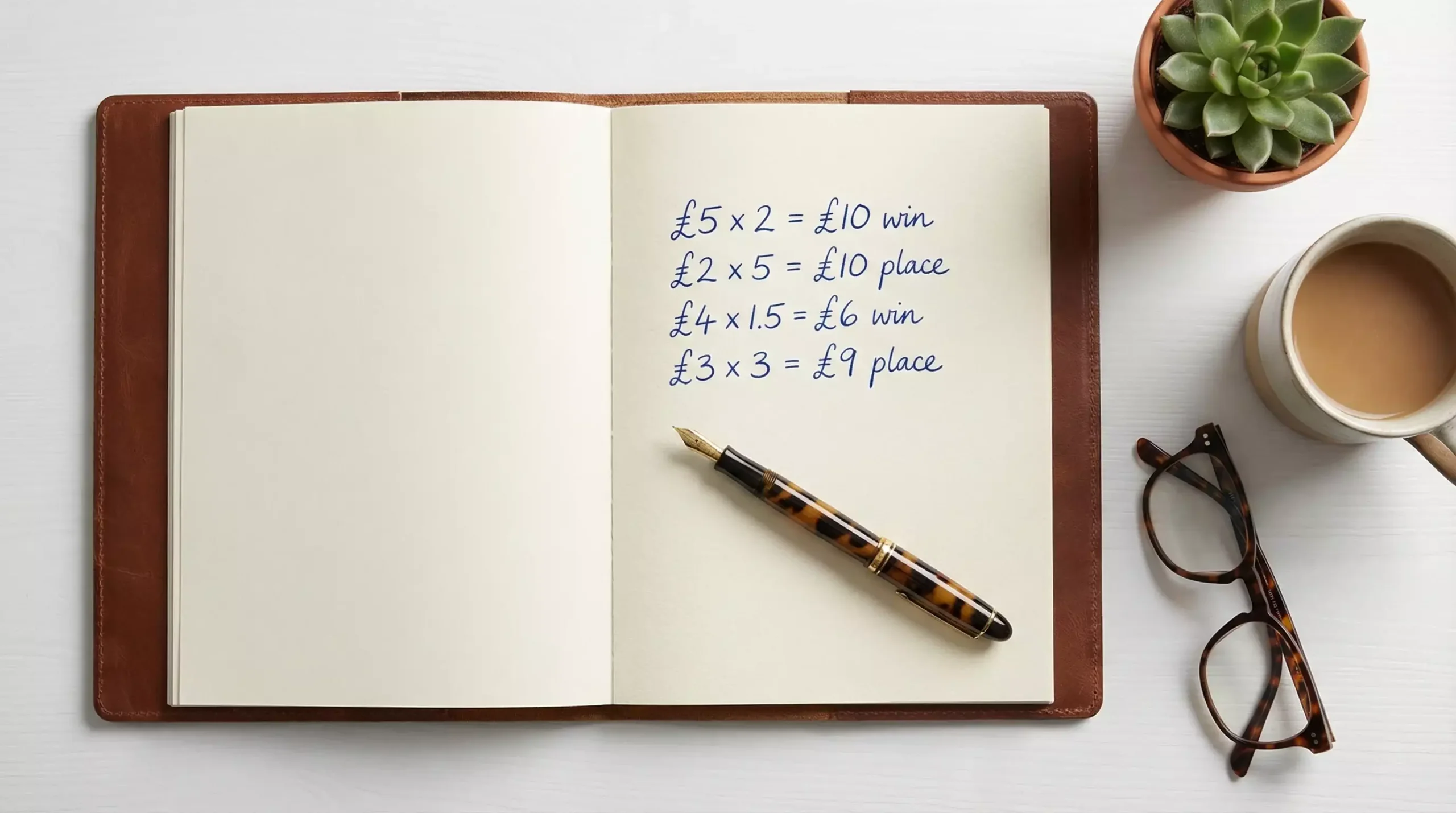
The place portion pays a fraction of the win odds. Standard Grand National terms are 1/4 odds for places 1-4. If you backed a horse at 20/1 each-way for £10: your win bet returns £210 (£200 profit plus stake); your place bet at 5/1 (quarter of 20/1) returns £60 (£50 profit plus stake). A winning horse returns £270 total. A placed horse returns just the place portion: £60.
The Grand National's large field makes each-way betting particularly attractive compared to smaller-field races. With 34 runners, even backing a horse at longish odds gives you reasonable chances of a place return. Favourites are notoriously unreliable—only a handful of market leaders have won in recent decades—which means longer-priced selections carrying each-way value make intuitive sense.
Extra-place promotions transform the mathematics further. If your bookmaker pays seven places instead of four, your placed horse could finish seventh and still return money. The same 20/1 each-way example would pay out even if your selection trailed home behind six others. In a race where falls, refusals, and pulled-up horses regularly reduce the finishing field, extended place terms significantly improve your probability of return.
The strategic implication is clear: the Grand National rewards each-way betting on bigger-priced horses more than most races. A £10 each-way stake on something at 33/1 with seven-place terms offers multiple paths to profit or partial stake recovery. Win returns are life-changing. Place returns cover your stake with change to spare. The trade-off is lower probability of any return compared to backing a shorter-priced selection, but the payoff structure suits the once-a-year punter who wants excitement without enormous downside.
UK Gambling Regulation and What It Means for Bettors
The landscape of UK betting has changed substantially since the Gambling Act 2005, with accelerating regulatory shifts affecting how bookmakers operate and what punters experience when claiming offers. Understanding this context helps explain certain restrictions you'll encounter during the sign-up process.
The UK Gambling Commission (UKGC) licenses and regulates all legal betting operators. A UKGC licence is mandatory for any bookmaker accepting bets from UK customers. This provides consumer protections including segregated customer funds, dispute resolution mechanisms, and required safer gambling tools. When claiming offers from licensed operators, your deposits are protected by law in ways that offshore or unlicensed alternatives cannot guarantee.
April 2025 marked a significant regulatory development: the introduction of a statutory levy on gambling operators raising £100 million annually for gambling harm research, prevention, and treatment. This replaced the previous voluntary contributions system and represents ongoing governmental attention to the betting industry's social responsibilities. Operators absorbed these costs into their business models, with implications for promotional generosity that are difficult to measure precisely but certainly present.
Affordability checks have become a contentious topic affecting high-stakes bettors and bookmaker-punter relationships. These checks, designed to identify customers betting beyond their means, have prompted pushback from racing industry stakeholders and some customer segments. Andrew Rhodes, Chief Executive of the Gambling Commission, acknowledged the tension: "People do have privacy concerns and I can understand that, but you have some difficult choices here. Either you put things in place that affect as few people as possible to try and protect those who need some protections and help to avoid friction for the rest, or you have to have something else."
The impact on Grand National betting is largely indirect for casual punters placing small stakes. Those planning to bet £10 or £20 on the race won't encounter affordability interventions. However, the broader regulatory direction affects bookmaker behaviour in ways that filter through to all customers. Enhanced identity verification requirements, for instance, reflect compliance obligations that make account registration more rigorous than it was a decade ago. The stricter KYC (Know Your Customer) processes you'll encounter when claiming free bets exist partly because of wider regulatory frameworks.
Market participation data reflects these shifting dynamics. According to YouGov research, the proportion of UK adults planning to bet on the Grand National has declined from 22% in 2023 to 17% in 2025. Whether this reflects regulatory climate, economic pressures, or other factors is debated, but the trend is clear. For bookmakers, this makes retaining and attracting Grand National bettors commercially critical—and explains the sustained investment in promotional offers despite tightening regulatory requirements.
Grand National Bookmaker Profiles
Each major UK bookmaker brings different strengths to Grand National betting. These brief profiles highlight what distinguishes each operator, particularly for punters focused on the Aintree festival.
bet365 combines comprehensive racing coverage with a polished digital experience. Their live streaming service covers virtually all UK racing, meaning you can watch the Grand National build-up races without leaving the app. The bet365 approach to each-way terms and extra places has consistently been competitive, and their BOG and NRNB features work exactly as advertised. The £10-for-£30 sign-up offer provides accessible entry. Main limitation: customer service via live chat can involve lengthy queues during peak racing periods.
Paddy Power leans into entertainment and promotional creativity. Their Grand National coverage typically includes multiple money-back specials—horses falling, finishing second, leading at specific fences—that provide insurance against frustrating near-misses. The brand's social media presence and tongue-in-cheek promotions appeal to casual punters who want betting to feel fun rather than serious. Cash-refund sign-up offer structure differs from the free-bet norm. Primary weakness: the app can feel cluttered compared to cleaner competitors.
William Hill brings heritage and high-street credibility. As one of the oldest names in British betting, William Hill offers reassurance for punters unfamiliar with newer digital operators. Their Grand National odds are competitive, and the £40 sign-up offer is among the more generous on paper. BOG and extended place terms apply during race week. Their retail network means you can discuss bets in-shop if you prefer human interaction. Downside: the mobile app has historically lagged behind competitors in user experience, though recent updates have closed the gap.
Betfred pitches itself as the bonus bookmaker, with Double Delight and Hat-Trick Heaven promotions on racing. For the Grand National, their sign-up offer headline of £50 in free bets sounds impressive, though shorter expiry windows require careful timing. Betfred's racing coverage is solid without being exceptional. Good choice for punters who value promotional variety throughout the year rather than just Grand National week. The interface is functional if unremarkable.
Coral operates under the same corporate umbrella as Ladbrokes but maintains a distinct identity and separate promotions. The £5 minimum deposit threshold is the lowest among major operators, making it particularly accessible for cautious punters. Coral Coins loyalty scheme rewards regular betting with redeemable points. The app experience is smooth, and odds competitiveness has improved in recent years. Limitation: the seven-day bonus expiry requires registration timing to ensure free bets remain valid for Grand National day.
Smart Betting Strategies for the Grand National
Maximising the value of free bets requires thinking strategically about when, how, and where you place your wagers. These principles apply whether you're using bonus stakes or your own money, but they're particularly relevant when deploying promotional credits that you want to work as hard as possible.
Timing matters for ante-post betting. Grand National markets open months in advance, with prices that can differ substantially from race-day odds. Early bettors sometimes secure value if a horse's profile fits the race and subsequent market moves shorten its price. The risk is non-runners—without NRNB coverage, an injured ante-post selection means lost stakes. The strategic approach: if backing ante-post, confirm NRNB applies to your bet; if it doesn't, wait until closer to the race when withdrawal risk diminishes.

Free bets suit longer odds selections. The stake-not-returned mechanic means free bets have higher expected value at bigger prices. A £10 free bet at evens returns £10 profit. At 10/1, the same free bet returns £100 profit. The differential is substantial. Unless you have strong conviction in a short-priced selection, deploying free bets on 10/1+ runners extracts more value from the promotional stake.
Combine offers strategically. Nothing prevents you from holding accounts with multiple bookmakers and claiming each one's sign-up offer. A punter who registers with three bookmakers in the week before the Grand National might accumulate £70-100 in free bets across their accounts. This requires organisation—tracking which bets are placed where, which bonuses have which expiry dates—but the approach multiplies promotional value substantially.
Consider each-way splits carefully. If you have a £20 free bet, placing it each-way effectively splits it into two £10 stakes. With extended place terms, this can be wise: you're backing a horse to place at reasonable fractional odds while also holding a win ticket. However, if the free bet terms specify stake-not-returned, an each-way free bet that places but doesn't win returns less than a winning win-only free bet would have. Match your bet structure to your selection's profile and the specific offer mechanics.
Bankroll discipline applies to free bets too. It's easy to treat promotional stakes casually—"it's free money, so why not go mad?"—but thoughtless deployment squanders value. Betting all your free bet credits on the same horse eliminates diversification. Placing free bets on heavy favourites provides low expected returns. The disciplined approach treats free bets as real stakes deserving of sensible allocation, even though their loss wouldn't affect your actual finances.
Frequently Asked Questions
How do I claim a Grand National free bet?
Claiming a Grand National free bet follows a standard process across most UK bookmakers. First, click through to the bookmaker via an official promotional link to ensure the offer attaches to your account. Complete the registration form with accurate personal details matching your identification documents. Make your first deposit using an eligible payment method—typically a UK debit card, as e-wallets like Skrill and PayPal are often excluded. Place a qualifying bet meeting the minimum stake and minimum odds requirements specified in the offer terms. Your free bet tokens will credit to your account once the qualifying bet settles. Timing is important: if the offer has a short expiry window, register close to Grand National week to ensure your free bets remain valid for the race itself. Check whether an opt-in is required before placing your qualifying bet, as some promotions don't activate automatically.
What is each-way betting on the Grand National?
Each-way betting combines a win bet and a place bet into a single wager, with each part costing half your total stake. A £10 each-way bet costs £20: £10 on your horse to win, and £10 on it to place. Standard Grand National place terms pay on the first four finishers at one-quarter of the win odds. If your horse wins, both parts pay out. If it finishes 2nd, 3rd, or 4th, only the place portion returns money. During Grand National week, most bookmakers extend place terms to six, seven, or even eight places, making each-way betting particularly attractive. For example, backing a 20/1 shot each-way with 7-place terms means you collect place returns if it finishes anywhere in the top seven. Each-way betting suits the Grand National because the race's large field and high attrition rate make place finishes more achievable than wins for any individual selection.
Do bookmakers remove offers on Grand National day?
Most bookmakers maintain their sign-up offers through Grand National day, but promotional terms often change as the race approaches. Enhanced odds offers and specific money-back specials frequently carry cut-off times—the boosted price might only be available until 10am on race day, for instance, with normal odds applying thereafter. Extra-place promotions sometimes have entry deadlines, requiring bets to be placed before a specified time to qualify for extended terms. Sign-up offers themselves usually remain available, but if an offer has a short expiry window and you register on Grand National morning, your free bets may arrive after the race has run. The safest approach is to complete registration and claim your offer 24-48 hours before the race, ensuring all promotional elements are active and free bets are available when you need them. Check specific bookmaker announcements during race week, as terms can be updated with limited notice.
Keeping Your Grand National Bet Fun, Not Stressful
Betting on the Grand National should be entertainment, not a source of financial stress. The overwhelming majority of people who place a bet on the National do so responsibly—a small stake, an afternoon's excitement, win or lose. If that describes your approach, carry on and enjoy the race.
If you find yourself betting more than you can afford, chasing losses, or experiencing distress related to gambling, support is available. GambleAware provides free, confidential advice via their helpline at 0808 8020 133 and at begambleaware.org. All UK-licensed bookmakers are required to provide self-exclusion options, deposit limits, and reality-check tools that can help you stay in control.
Set a budget before Grand National day and stick to it. Decide what you're prepared to lose, in full, with zero expectation of return. If your selection doesn't come in, accept the loss and don't be tempted to place further bets trying to recover. Free bets and promotional offers should add to the fun, not encourage wagering beyond your means. Betting must be for adults aged 18 or over only.
