
Attending Grand National 2026: Tickets, Dress Code and Tips
 Available in US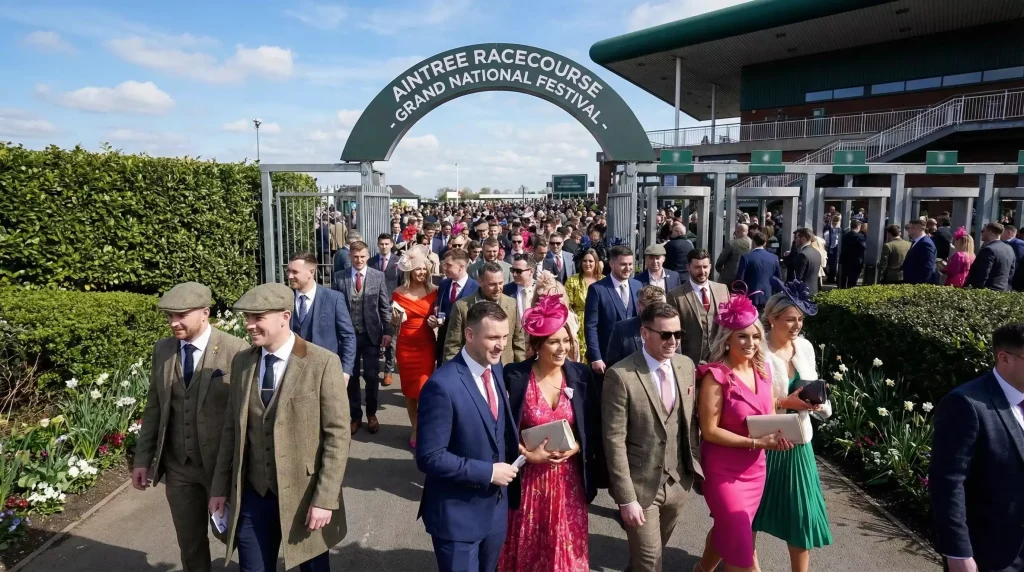
Watching the Grand National on television captures the race but misses the atmosphere. Attending in person transforms a sporting event into a race day experience—the collective intake of breath as horses approach Becher’s Brook, the roar when the leader clears the last, the buzz of seventy thousand people sharing the same anticipation.
Aintree’s daily capacity of 70,000 makes Grand National day one of the largest single-day sporting events in Britain. That scale creates logistical challenges: tickets sell out, enclosures fill, and queues form for everything from bars to betting windows. Planning ahead separates a memorable day from a frustrating one.
This guide covers ticket options, dress code requirements, on-course betting, and practical tips that improve your experience. Whether you’re a first-time visitor or a returning regular, understanding what to expect helps you make the most of your day at the races.
Attending Grand National 2026 — More on this topic at grand national free bets.
Ticket Options and Enclosures
The Aintree Festival draws approximately 150,000 visitors across its three days, with Saturday’s Grand National card commanding the highest demand. Tickets for the main event typically sell out weeks or months in advance, and prices reflect the occasion’s prestige. Early booking provides both availability and better pricing.
The Queen Mother Enclosure offers the most affordable general admission, providing access to viewing areas, betting facilities, and refreshments without the formality of premium sections. Dress codes are relaxed, atmosphere is lively, and proximity to the course is perfectly adequate for watching the racing.
The Pavilion represents a step up in price and facilities. Better bars, improved food options, and slightly less crowded viewing areas justify the premium for those who value comfort. Dress codes tighten here—smart casual as a minimum, with most attendees dressing more formally.
County Stand and Lord Sefton enclosures cater to those seeking the full occasion. Formal dress codes apply, hospitality packages include meals and drinks, and the atmosphere tends toward celebration rather than pure racing focus. These tickets disappear fastest and cost most.
Private boxes and corporate hospitality exist for those with corporate budgets or special occasions to mark. Prices reach into thousands of pounds but include everything: food, drinks, dedicated viewing areas, and service throughout the day.
Day-specific tickets matter. Friday’s Ladies Day often sells out separately, and some packages cover the full three-day festival. Check what your ticket includes before assuming access to all days or all enclosures. The Aintree website provides definitive information on current availability and pricing.
What to Wear
Dress codes vary by enclosure, and Aintree enforces them at entry points. Arriving in attire that doesn’t meet requirements means either buying replacement items at inflated prices or being refused access entirely. Checking the specific rules for your ticket before leaving home avoids that particular disaster.
The Queen Mother Enclosure operates the most relaxed standards: smart casual, no sportswear, no fancy dress. Jeans are permitted if smart; trainers are not. Men typically wear chinos or trousers with a collared shirt; women have broad latitude within the smart casual framework.
The Pavilion and premium enclosures require formal attire. For men, this means suits or jacket and tie combinations. Shirts must have collars. Shoes must be smart—no trainers, no casual boots. For women, formal daywear, cocktail dresses, or trouser suits all work. Ladies Day on Friday sees the most elaborate outfits, with hats and fascinators almost mandatory by social convention rather than formal rule.
Weather complicates outfit planning. April in Liverpool can deliver sunshine, rain, wind, or all three within hours. Layering helps—a coat that works over formal wear, an umbrella compact enough to carry, shoes that survive muddy ground without losing their smart appearance. Many regulars bring backup footwear, changing before entering premium areas.
The practical advice: dress slightly more formally than you think necessary, bring protection against weather, and wear shoes you can stand in for eight hours. Looking good matters less than remaining comfortable through a long day of walking, queuing, and standing.
See also News.
Betting at the Racecourse
On-course betting operates differently from online or high street wagering. The Tote provides pool betting, where all stakes go into a central pool and winnings are divided among successful bettors. Fixed-odds betting is available through on-course bookmakers who display their prices on boards in the betting ring.
The betting ring atmosphere is part of the experience. Bookmakers shout odds, prices change visibly as money comes in, and the physical act of handing over cash and receiving a ticket feels more connected to the racing than tapping a phone screen. For those who’ve only bet online, the ring offers a glimpse of how gambling worked before apps existed.
Prices in the ring sometimes differ from online bookmakers. Occasionally you’ll find better odds on-course; sometimes the online market offers superior value. Checking your phone before placing a bet ensures you’re not accepting significantly worse terms than you could get digitally—assuming you’re comfortable breaking from the analogue experience.
Cash remains king at many on-course bookmakers, though card payments have become more common. Bringing sufficient cash avoids queuing at ATMs that charge fees and run dry by mid-afternoon. Keeping your betting slip safe matters more than usual—lose it, and proving the bet becomes difficult.
Queues for betting windows build as race time approaches. Placing bets early—particularly for the Grand National itself—avoids the rush and ensures you don’t miss the off while waiting in line. Experienced racegoers place their National bet early, then enjoy the buildup without the stress of last-minute wagering.
Practical Tips for Race Day
Arrive early. Gates open mid-morning; the first race isn’t until afternoon. Using that gap to explore, find good viewing spots, and place early bets makes the day more relaxed than rushing in just before racing starts.
Eat before or between races. Food queues during the hour before the Grand National become impractical. Either eat early, bring snacks if permitted by your enclosure’s rules, or accept that the National itself will be watched hungry.
Plan your exit strategy. Leaving immediately after the National means joining seventy thousand others attempting the same thing. Staying for the final two races lets crowds thin. If you must leave early, know which exit serves your transport route.
Phone battery matters. Apps for betting, transport, and communication all drain power. Portable chargers or battery cases extend your phone’s usefulness through a long day. The course offers limited charging facilities for the general public.
Enjoy the Day—Not Just the Betting
The race day experience extends beyond the betting ring. The atmosphere, the fashion, the racing itself—all provide entertainment regardless of how your bets perform. Setting a betting budget before arriving keeps gambling in its proper place as one component of the day rather than its entire purpose.
If you need support, GambleAware and the National Gambling Helpline offer free, confidential advice. All betting on-course and online requires customers to be 18+. Terms and conditions apply to every wager.
