
How to Claim Grand National Free Bets 2026: Step-by-Step Registration Guide
 Available in US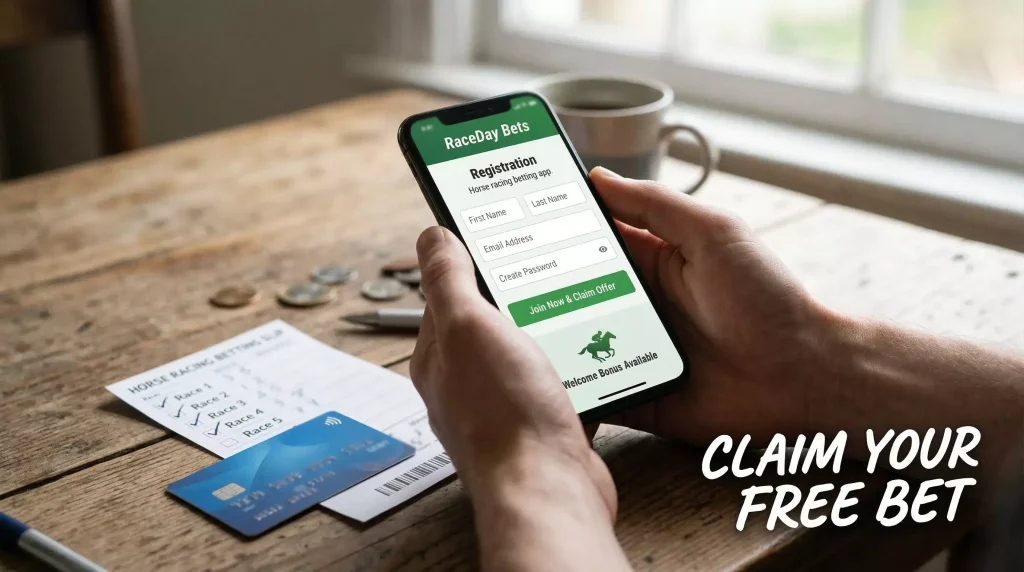
Every April, millions of pounds in Grand National free bets go unclaimed. Not because punters don’t want them, but because they fail the claim process. A wrong payment method here, an overlooked minimum odds requirement there, and suddenly that £30 bonus evaporates before it ever hits your account.
If you’re reading this, you’re probably planning to bet on the Grand National 2026. According to YouGov research conducted for OLBG, 62% of UK adults planning to bet on the race will do so online, with 28% heading to high street bookmakers and just 9% placing wagers at Aintree itself. That overwhelming preference for digital betting means most punters will encounter the claim process we’re about to dissect.
The good news: once you understand how to claim your bonus correctly, the process becomes almost mechanical. The bad news: bookmakers design their terms and conditions to create friction. Not because they’re malicious, but because free bets represent real liability on their books. Every hurdle you fail to clear saves them money.
This guide strips away the marketing fluff and gives you the exact steps to claim your bonus successfully. We’ll cover registration, verification, qualifying bets, and the specific pitfalls that catch out first-time claimers every year. By the end, you’ll know precisely what to do, when to do it, and what to avoid. Because the only thing worse than losing a bet is losing a free bet you never actually received.
How to Claim Grand National Free Bets 2026 — More on this topic at grand national free bets.
Before You Start: The Pre-Registration Checklist
Preparation matters more than most punters realise. Walking into a registration process unprepared leads to abandoned applications, delayed verifications, and missed promotional windows. Here’s what you need before clicking that “Join Now” button.
First, gather your identification documents. UK bookmakers operate under Gambling Commission regulations that require identity verification. You’ll need a government-issued photo ID, either a passport or driving licence. Some operators also request proof of address, typically a utility bill or bank statement dated within the last three months. Have digital copies ready. Phone photos work, but ensure text is legible and all corners of the document are visible.
Second, check your payment method eligibility. This catches out more new customers than any other requirement. Most welcome offers exclude deposits made via e-wallets like Skrill, Neteller, and PayPal. Some also exclude prepaid cards and certain credit card types. Debit cards remain the safest option for qualifying deposits. If you only have access to excluded payment methods, you’ll need to arrange alternatives before proceeding.
Third, confirm you meet the basic eligibility criteria. You must be 18 or older, resident in the United Kingdom, and not already hold an account with that bookmaker. Household restrictions sometimes apply: some operators limit one bonus per household, IP address, or payment card. If someone in your home already claimed the same offer, you may be excluded regardless of whether you personally have an existing account.
Fourth, read the promotional terms and conditions before starting. Offers change regularly, and what you saw advertised last week might differ from current terms. Note the minimum deposit, minimum odds requirements, wagering conditions, and expiry dates. Promotional codes, where required, must typically be entered during registration rather than added later. Missing this step creates accounts ineligible for bonuses despite completing everything else correctly.
Finally, set aside enough time. Verification processes vary from instant to several days. While some bookmakers approve accounts within minutes using automated document checks, others require manual review. If you’re registering close to the Grand National, account for potential delays. A week’s buffer provides reasonable protection against verification bottlenecks during the busiest betting period of the year.
Registration Steps: From Zero to Betting Account
The registration process follows a standard pattern across UK bookmakers, though individual steps vary slightly. Understanding this framework helps you navigate any operator’s signup flow without confusion.
Navigate to the bookmaker’s website or download their mobile app. Look for buttons labelled “Join,” “Register,” or “Sign Up,” typically positioned prominently in the header. Some operators present promotional landing pages first; ensure you’re on an offer page that clearly states the welcome bonus terms before proceeding. Clicking through from generic pages sometimes results in accounts created without promotional eligibility.
Enter your personal details on the first form screen. This includes your full legal name exactly as it appears on your ID, date of birth, residential address, email address, and mobile phone number. Bookmakers cross-reference this information against electoral rolls and credit databases for verification. Inconsistencies between your submitted details and official records cause verification failures. Use your formal first name, not nicknames. If you’ve moved recently and your ID shows a previous address, be prepared for additional verification steps.
Create your login credentials next. Choose a username that doesn’t contain personal information, and select a strong password. Most operators require at least eight characters with mixed case and numbers. You’ll also set security questions and potentially configure two-factor authentication. Enable 2FA where offered; it protects your account and speeds future logins.
Enter any promotional or bonus codes at this stage. Some offers require specific codes entered during registration rather than at deposit. The code field appears differently across operators: sometimes on the first page, sometimes during payment setup. Search the entire registration flow before completing if you’re uncertain where to enter it. Missing this field means missing your bonus.
Configure your account preferences. Set deposit limits if you wish to do so pre-emptively. Choose your preferred odds format, typically fractional for UK horse racing. Opt into or out of marketing communications based on your preference. Some promotions require marketing opt-in as a condition; check your specific offer terms.
Complete identity verification. Many bookmakers now offer instant verification using automated document scanning. You’ll photograph your ID using your phone or webcam, with software reading and matching the details against your submitted information. If instant verification fails or isn’t offered, you’ll upload documents manually for review. Ensure images are clear, unobstructed, and show all document edges. Dark or blurry photos trigger rejection and delays.
Once verified, your account becomes active. Some bookmakers restrict betting until verification completes, while others allow limited activity with full verification required before withdrawal. Check your account status before depositing to understand any restrictions in place.
See also Best Grand National Betting Sites 2026.
Placing Your Qualifying Bet
The qualifying bet unlocks your free bet bonus. Get this wrong, and everything preceding it becomes pointless. Here’s how to place a qualifying bet that actually qualifies.
First, understand what you’re dealing with. A qualifying bet is your first real-money wager after deposit, placed according to specific rules that trigger the bonus release. These rules vary significantly between offers. Some require any bet at any odds. Others demand minimum odds of 1/2 (1.50), 1/1 (2.00), or higher. Some restrict which sports or bet types count. Read your specific offer terms to identify the exact requirements.
Fund your account with the minimum qualifying deposit. This is typically £5, £10, or £20 depending on the offer. Remember: use an eligible payment method. If you deposit via an excluded method, your entire promotional eligibility may be voided, even if you later deposit additional funds via qualifying methods.
Select your event and market carefully. For Grand National offers, betting on the race itself makes logical sense, but timing matters. Ante-post bets placed weeks before the race have different dynamics than bets placed on race day. If your offer has no specific sport restrictions, you could technically place your qualifying bet on any event meeting the odds requirements. Some punters prefer qualifying on events with high liquidity and predictable outcomes rather than the chaotic National field.
Check the minimum odds requirement before confirming. Most common thresholds are evens (1/1 or 2.00) or 1/2 (1.50). If your offer requires 1/1 minimum odds and you back a 4/6 favourite, your bet won’t qualify. The odds must meet the threshold at bet placement, not at settlement. If you place a qualifying bet on an ante-post market where prices shorten after your wager, your bet remains valid provided it met requirements when placed.
Review bet type restrictions. Some offers exclude system bets, each-way bets, or specific market types. “Single bets only” means accumulators don’t qualify. “Win market only” excludes place betting. Each-way bets are particularly problematic since they comprise two separate stakes; some operators count only the win portion toward qualifying requirements, effectively halving your qualifying stake value.
Confirm your stake matches or exceeds the minimum. If the offer requires a £10 qualifying bet, a £9.99 wager won’t trigger the bonus. Match the exact minimum or exceed it; there’s no additional benefit to over-staking unless the bonus scales with your qualifying bet amount.
Finally, place the bet and retain your confirmation. Screenshot your bet slip showing the selection, stake, odds, and bet reference number. If disputes arise later, this evidence proves you met the qualifying criteria. Most issues resolve quickly with clear documentation.
Receiving Your Free Bet Bonus
You’ve registered, deposited, and placed your qualifying bet. Now comes the waiting and the checking. Understanding when and how your bonus appears prevents unnecessary anxiety and premature support tickets.
Free bets typically credit to your account in one of two ways: immediately upon qualifying bet placement, or upon qualifying bet settlement. The distinction matters, especially around Grand National time when settlement might occur days after placement for ante-post wagers.
Immediate crediting is straightforward. Once your qualifying bet registers in the system, the bonus appears. You’ll see it as a separate balance or token in your account, distinct from your cash funds. These bonuses can usually be used on any subsequent bet while your qualifying bet remains open.
Settlement-based crediting requires patience. Your free bet only appears after the qualifying bet concludes, regardless of outcome. This means an ante-post Grand National qualifying bet placed in March won’t release your free bet until after the April race. Plan accordingly if you intended to use the bonus on the National itself rather than post-race events.
Locate your free bet balance after crediting. Bookmakers display bonus funds differently. Some show a separate “Free Bet Balance” alongside your cash balance. Others use a token system where free bets appear as selectable options in the bet slip. A few integrate bonuses into the main balance with restrictions applied at withdrawal. Familiarise yourself with your specific bookmaker’s interface to avoid confusion.
Check expiry dates immediately. Free bets are not permanent. Most expire within seven days of crediting, though windows range from 48 hours to 30 days. The countdown typically begins when the bonus credits, not when you placed your qualifying bet. Mark the expiry in your calendar and use the bonus before it vanishes.
Note any usage restrictions. Some free bets have minimum odds requirements for redemption. Others exclude specific sports, bet types, or markets. Stake-not-returned versus stake-returned terms affect your potential returns. With stake-not-returned free bets, winnings exclude your original stake; a £10 free bet at 5/1 returns £50, not £60. These details determine how to deploy your bonus effectively.
If your bonus hasn’t appeared within the stated timeframe, check your bet history first. Verify your qualifying bet was placed correctly and met all requirements. If everything appears correct, contact customer support with your bet reference number and account details. Resolution typically takes 24 to 48 hours during normal periods, though response times extend during peak racing events.
Online vs High Street: Where to Claim Your Bonus
The shift from high street bookmakers to online platforms has fundamentally changed how punters interact with the Grand National. Understanding the differences between these channels affects both your claiming strategy and your overall betting experience.
The numbers tell a clear story. According to YouGov research for OLBG on Grand National 2026 betting intentions, 62% of UK adults planning to bet chose online platforms as their preferred channel. High street bookmakers attracted 28%, while just 9% intended to wager on-course at Aintree. “As the decline in high street bookmakers continues, our study reveals 62% of UK adults plan to bet on the Grand National online, 28% in a high street bookmaker and only 9% on-course at Aintree, showcasing how real-life trends are reflected in our survey results,” noted an OLBG spokesperson.
Online claiming offers distinct advantages. Welcome bonuses are almost exclusively digital; high street shops rarely match the promotional generosity of their online counterparts. Registration happens from your sofa. Document verification completes digitally. Qualifying bets can be placed at midnight on a Tuesday if that suits you. No queues, no travel, no betting shop atmosphere required.
The promotional landscape online also offers greater variety. Multiple operators means multiple bonuses for those willing to register with several bookmakers. Price comparison across platforms takes seconds. Enhanced odds offers appear prominently. Free bet tokens can be tracked easily in your account dashboard.
High street claiming has its place, though. Some punters prefer cash transactions without creating digital footprints. Shop staff can explain terms face-to-face. Immediate cash payouts avoid withdrawal processing times. The social aspect of betting shop culture appeals to certain demographics, particularly for an event like the Grand National with its traditional community viewing atmosphere.
Research from Entain Group found that 82% of cash bets placed on the Grand National 2026 were £5 or less, with fewer than 1% exceeding £20. This low-stakes profile aligns well with online free bet offers, where £10 qualifying bets unlock £30 or £40 bonuses. For the casual once-a-year punter, online claiming delivers better value per pound wagered.
If you’re claiming online, complete registration well before race week. Server loads increase dramatically as the National approaches, potentially slowing verification processes. A comfortable buffer ensures your account is active, verified, and bonus-eligible when you need it.
Common Mistakes That Void Your Free Bet
Understanding where others fail helps you succeed. These mistakes recur every Grand National season, catching out even punters who thought they understood the process.
Using an excluded payment method remains the most common error. Skrill, Neteller, PayPal, Paysafecard, and prepaid cards are excluded from most welcome offers. The exclusion applies to your qualifying deposit, not subsequent deposits. If your first deposit uses Skrill, you’ve typically forfeited bonus eligibility permanently for that account, even if every subsequent deposit uses a debit card. No amount of customer service pleading reverses this. Check payment restrictions before depositing anything.
Failing to meet minimum odds requirements follows closely. If your offer specifies minimum odds of 1/1 (evens) and you back a 4/7 shot, you’ve wasted your qualifying bet. This mistake often happens when punters don’t check requirements before placing bets, assuming any wager qualifies. Always verify the threshold before selecting your event.
Placing ineligible bet types causes similar problems. “Singles only” means accumulators don’t count. “Win bets only” excludes each-way. Some offers exclude certain sports entirely: a football welcome offer won’t be triggered by a horse racing qualifier, regardless of how prominently the bookmaker advertises Grand National markets.
Missing promotional codes during registration proves harder to fix than other errors. If the offer requires code entry at signup and you forgot, you’ve created an account without promotional eligibility. Some bookmakers allow manual code addition via customer service; many don’t. Check whether your offer requires a code and note where in the registration flow to enter it.
Betting below the minimum stake invalidates otherwise correct bets. According to YouGov data, 43% of those planning to bet on the Grand National 2026 intended to stake less than £10. This aligns neatly with common minimum qualifying bet thresholds, but a £9 bet on a £10 minimum offer achieves nothing. Match or exceed the requirement precisely.
Attempting to claim multiple welcome offers breaches terms of service. One offer per person, per household, per IP address, per payment card applies across virtually all operators. Using a different email address doesn’t circumvent these restrictions. Bookmakers cross-reference accounts extensively, and duplicate claiming results in bonus confiscation and potential account closure.
Forgetting to opt in where required leaves promotions unclaimed. Some offers require explicit opt-in before your qualifying bet, either via a button click, checkbox, or promotional hub selection. If opt-in is mandatory and you didn’t complete it, your subsequent bet won’t trigger the bonus. Check offer mechanics before depositing.
Finally, letting free bets expire wastes the effort spent acquiring them. Seven-day expiry windows pass quickly, especially during busy periods when you might not be actively thinking about betting. Set calendar reminders when free bets credit. Use them or lose them.
Mobile App Claiming: Bonuses on the Go
Mobile apps dominate modern betting activity. Most major UK bookmakers report over half their traffic coming from mobile devices, and the Grand National generates particularly high mobile engagement as punters bet from pubs, parties, and living rooms nationwide.
Claiming via mobile apps follows the same fundamental process as desktop, but offers some practical advantages. Document verification becomes simpler when your phone camera directly captures your ID or proof of address. No scanning, no file transfers, no quality loss from photographing printed documents. Point, shoot, submit.
Some bookmakers offer app-exclusive bonuses or enhanced terms for mobile registrations. These might include higher bonus values, reduced wagering requirements, or additional free bet tokens. Check whether your chosen operator differentiates between app and desktop offers before deciding which platform to use.
Push notifications keep you informed about bonus crediting, expiry warnings, and promotional updates. Desktop users must actively check their account; mobile users receive alerts. This proves particularly valuable for time-sensitive promotions and approaching expiry dates.
App stores add a layer of legitimacy verification. Operators appearing in the Apple App Store or Google Play Store have passed platform review processes. This doesn’t guarantee ethical behaviour, but it filters out the most egregious unlicensed operations. If you’re selecting a new bookmaker, presence in mainstream app stores provides baseline reassurance.
Potential drawbacks exist. Smaller screens make reading terms and conditions more cumbersome, increasing the chance you’ll miss important restrictions. Autocorrect errors during registration can create name mismatches against your ID. Network connectivity issues might interrupt verification processes. If you have reliable WiFi access, completing registration there rather than on mobile data reduces these risks.
Biometric login features on modern apps, including Face ID and fingerprint authentication, speed subsequent access without compromising security. Once registered and verified, mobile apps offer the most convenient ongoing betting experience for Grand National wagers and beyond.
Verification Problems and How to Solve Them
Identity verification causes more registration frustration than any other step. When it works, it’s invisible. When it fails, it blocks everything. Understanding common failure points helps you avoid them or resolve them quickly.
Document quality causes most automated verification failures. Blurry photos, cut-off corners, glare obscuring text, or fingers covering information all trigger rejection. Ensure your entire document is visible, well-lit, and sharply focused. Use a plain, contrasting background. Avoid reflective surfaces that cause glare. Take multiple shots and select the clearest one.
Name mismatches between your registration details and ID documents create problems. If your ID shows “Michael” but you registered as “Mike,” the system may flag this inconsistency. Similarly, middle names present on your ID but omitted during registration cause friction. Use your full legal name exactly as it appears on your primary identification document.
Address verification fails when your current address doesn’t match credit reference databases. This happens frequently for recent movers, people in shared accommodation, or those not on electoral rolls. Utility bills or bank statements showing your name and current address typically resolve this, but allow additional processing time for manual review.
Expired documents are rejected automatically. Check that your passport or driving licence remains valid before attempting verification. If your ID expires within the next month, consider renewing before registration to avoid complications during the busy Grand National period.
If automated verification fails, operators typically offer manual alternatives. Upload clear scans or photos of your documents through the account portal. Manual reviews take longer than automated processes, anywhere from a few hours to several business days depending on operator capacity and how close you are to major racing events.
Persistent verification failures may require direct customer service contact. Prepare to explain the specific error messages received and provide alternative documentation if available. A second form of ID, additional proof of address, or a selfie holding your documents might be requested. Cooperation speeds resolution; obstruction prolongs it.
For particularly stubborn cases, consider whether that specific bookmaker is worth the effort. Multiple operators offer similar promotions. If one creates insurmountable verification hurdles, another might process your application smoothly. Don’t spend hours battling one operator when alternatives exist.
Once verified, retain copies of the documents you submitted. Some operators request periodic re-verification, particularly before large withdrawals. Having your documentation ready prevents future delays.
Free Bets Are Not Free Money
Free bets are marketing tools, not free money. They’re designed to introduce you to betting platforms with the expectation that you’ll continue wagering with your own funds. Keep this context in mind as you claim your bonus.
Set deposit limits before you start. Every licensed UK bookmaker offers tools to restrict how much you can deposit daily, weekly, or monthly. Using these proactively prevents impulsive decisions during the excitement of Grand National day. A limit set calmly in advance protects you when emotions run high.
If you’re concerned about your gambling or someone else’s, resources exist. GambleAware provides free, confidential advice at www.begambleaware.org or by phone on 0808 8020 133. The National Gambling Helpline offers 24-hour support. Self-exclusion schemes like GAMSTOP allow you to block yourself from all licensed UK gambling sites for periods of six months to five years.
The Grand National should be entertainment. If betting stops being enjoyable, if you’re chasing losses, if you’re spending money you can’t afford, or if gambling is affecting your relationships or mental health, these are warning signs. Free bets make poor compensation for underlying problems. Please bet responsibly, and only with money you can afford to lose. You must be 18 or older to gamble in the United Kingdom.
